Essay · April 29, 2025
How to Turn Obvious Problems into Million-Dollar Businesses
You don’t have to invent teleportation to create a multi-million dollar business—you just have to spot the “rice balls” everyone else ignores (I’ll explain).
Today, we’re breaking down:
- Why profitable business ideas are often hidden in plain sight
- How a chemical engineer turned a DIY hack into a $20k/mo business in 10 months (while 8 months pregnant)
- 5 frameworks to identify obvious-but-overlooked problems in your everyday life
- The counterintuitive reason some problems remain unsolved (despite high demand)
— Kevin
The "Rice Ball Test": How to Turn Obvious Problems into Million-Dollar Businesses
Last week, we spoke with Ash, founder of Auggie, for what was supposed to be a quick interview about her growth strategy. Instead, we discovered something far more valuable: a case study in how to spot and capitalize on obvious-but-overlooked problems.
In less than a year, she built a $20K/mo business that's already profitable—all by solving a problem so obvious that when she explains it, the most common reaction is: "Wait, that didn’t exist?"
The insight that sparked her business? Women were filling pantyhose with rice to simulate breast implants before committing to a $10,000 surgery.
When DIY Hacks Signal Business Opportunities
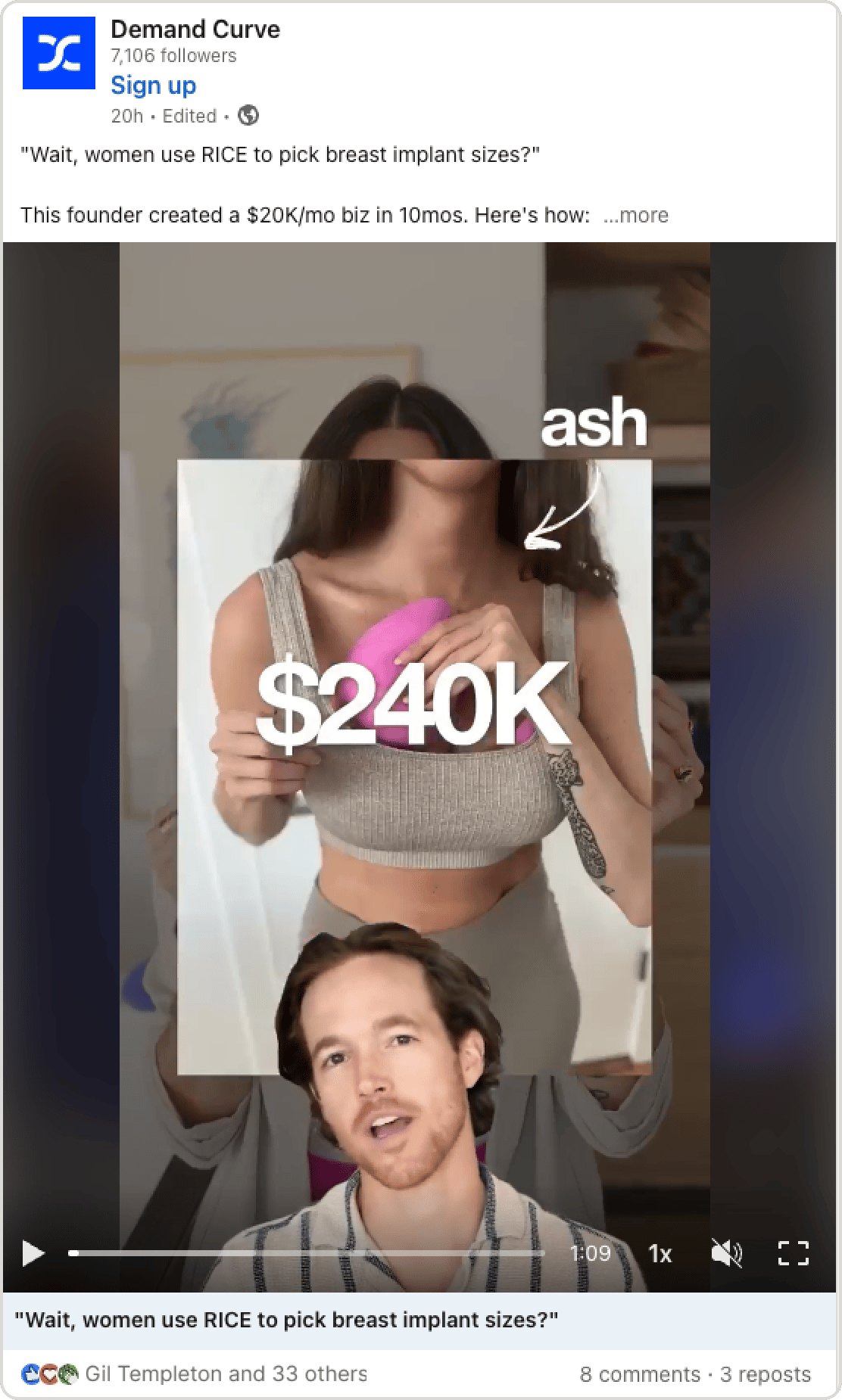
Back in 2022, Ashleigh (a chemical engineer, ex-Deloitte consultant, and former tech CEO) was getting ready for a wedding with a friend who had recently gotten breast implants. When she asked how her friend had chosen her implant size, the answer shocked her.
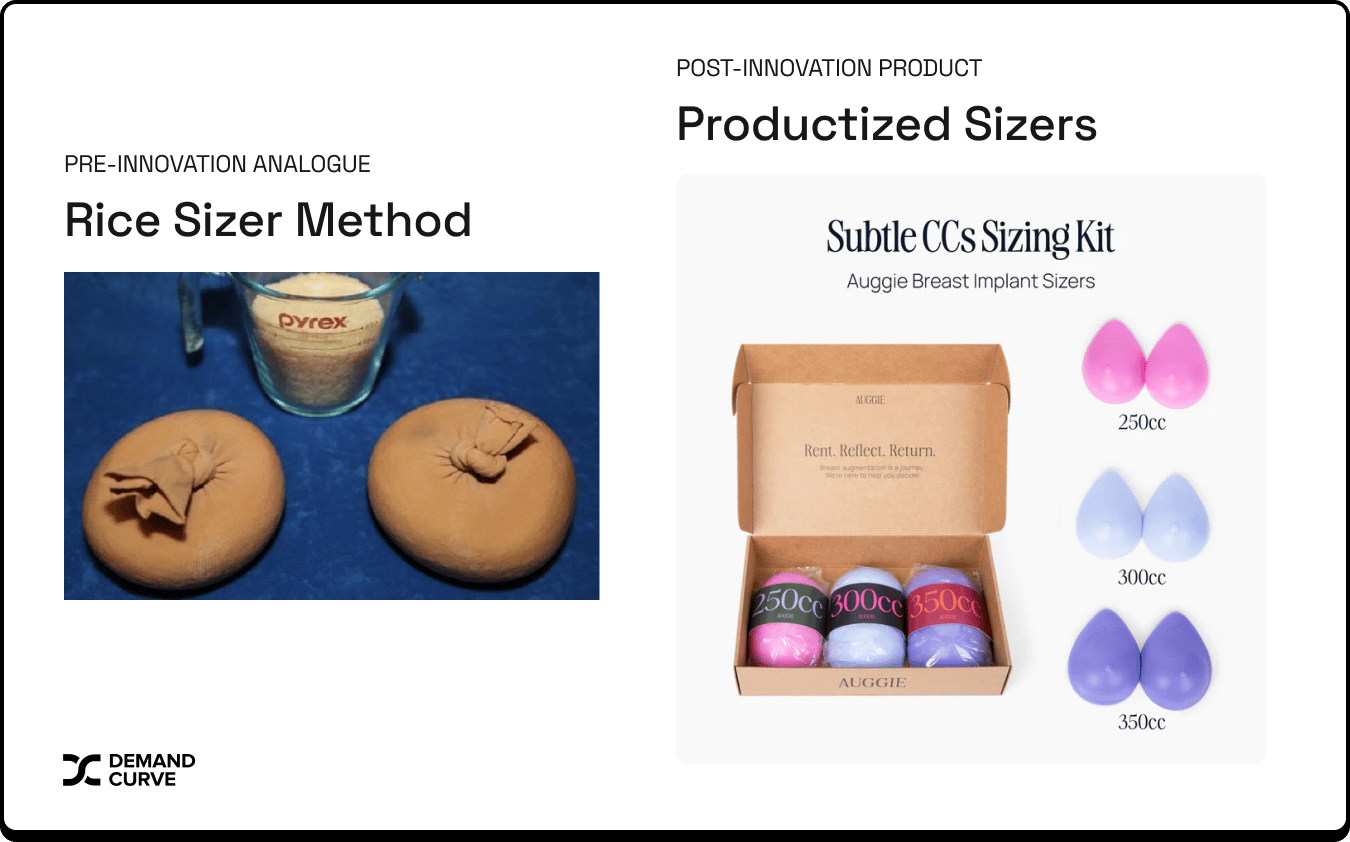
“I used the ‘rice sizer’ method.” Meaning, she filled pantyhose with RICE, converting cups to CCs to create DIY implant sizers at home."
While this method is fairly common, and even recommended by some surgeons, Ash with her chemical engineering background, promptly went home, did an experiment, and confirmed that the packable density of rice is 18-20% different from medical-grade silicone. So women who are using the rice method for sizing, are getting a false sense of feel.
Ash discovered that breast implant manufacturers already make professional sizers, but they're only available to surgeons. Women reported feeling rushed using the in-office sizers during a 15-30 minute try-on during consultations.
That's when it clicked: women need "Warby Parker at-home glasses try-on for boobs!"
Ashleigh launched Auggie—a rental service letting women try different implant sizes at home for 7-14 days with their own clothes. Within 10 months, Auggie hit profitability, sold over 1,000 units, and collected over one hundred 5-star reviews.
The most surprising outcome? Some women try Auggie sizers and realize they love their natural breasts—saving them from a surgery they might have regretted.
Three Types of Innovation Opportunities
Auggie's story illustrates that profitable businesses don't require groundbreaking inventions. Founders find white-space in dozens of ways—new tech, fresh distribution channels, quirky brand twists, and everything in between. I’m going to spotlight three high-leverage plays to turn scrappy ideas into real businesses.
- Product Innovation
Creating something truly new that solves an existing problem in a novel way. - Business Model Innovation
Taking existing products and reimagining how they’re sold, distributed, or monetized. - Branding Innovation
Taking commodity products and injecting personality, purpose, and premium positioning.
Think of these as “lenses,” not firm boxes. A single startup can, and often does, use more than one at the same time.
Auggie is fascinating because it's a great example of a business model innovation with slight product innovations.
Ashleigh’s innovation wasn’t being the first one to create implant sizers, she worked with a medical device manufacturing company to improve an existing technology, and then created a novel rental service that made them accessible directly to consumers. By improving and productizing an existing technology, she accelerated her time-to-market (and profitability).
Innovation Examples
Let's explore three high-leverage approaches to turn scrappy ideas into real businesses:
You'll notice that many of the examples below don't use just one innovation type exclusively. For example, Allbirds combines product innovation (sustainable materials), business model innovation (direct-to-consumer), and branding innovation (eco-friendly lifestyle positioning) to create their competitive advantage.
Product Innovations
Product innovation means creating something truly new that solves an existing problem in a novel way.
Technological Breakthroughs: Creating something that wasn't possible before.
- Example: ChatGPT enabled natural language conversations with a large language model, creating an entirely new way for humans to learn, create, and do work.
Significant Improvements: Making existing products dramatically better.
- Example: Love em or hate em, Tesla transformed electric vehicles from limited-range novelties into high-performance cars with superior range and performance.
New Combinations: Combining existing technologies in novel ways.
- Example: Peloton combined stationary bikes (which had existed for decades) with streaming technology and social features to create a new home fitness experience.
Business Model Innovations
Business model innovation takes existing products and reimagines how they're sold, distributed, or monetized.
Subscription Transformation: Converting one-time purchases into recurring revenue models.
- Example: Spotify transformed music consumption from purchasing individual albums or songs to a monthly subscription for unlimited access, changing how people consume music.
Rental Transformation: Taking products traditionally purchased outright and offering them as rentals.
- Example: Rent the Runway turned designer clothing from an expensive purchase into an affordable rental, making luxury fashion accessible to a much wider audience.
Professional-to-Consumer Bridge: Making tools or services only available to professionals accessible to consumers.
- Example: Canva made professional-level graphic design accessible to everyday users without the steep learning curve of Adobe software or the need to hire a designer.
Marketplace Creation: Connecting buyers and sellers in ways they couldn't connect before.
- Example: Airbnb created a marketplace that allowed homeowners to rent spare rooms or entire homes directly to travelers, bypassing traditional hospitality gatekeepers.
Direct-to-Consumer: Removing middlemen to offer better products at lower prices.
- Example: Hims & Hers took prescription healthcare products directly to consumers through telemedicine, cutting out traditional doctor visits for routine treatments like hair loss and erectile dysfunction.
Branding Innovations
Branding innovation takes commodity products and injects personality, purpose, and premium positioning.
Design-Led Transformation: Taking an existing product and making it beautiful while changing little else.
- Example: Welly transformed boring bandages and first aid supplies into colorful, distinctive products with premium packaging, creating a design-forward brand in a traditionally clinical category.
Purpose-Driven Positioning: Aligning existing products with social causes or values.
- Example: TOMS Shoes built their entire brand around the "One for One" model, donating a pair of shoes for each pair purchased, transforming commodity footwear into a vehicle for social impact.
Lifestyle Integration: Turning utilitarian products into lifestyle statements.
- Example: Allbirds took basic sneakers and repositioned them as sustainable, comfortable lifestyle products for environmentally conscious consumers, creating a brand identity far beyond the functional benefits.
Demographic Repositioning: Taking products traditionally marketed to one group and repositioning them for another.
- Example: Pattern Beauty created hair care products specifically formulated for curly and textured hair (particularly positioned towards people of color), serving an underrepresented demographic that mainstream brands had largely ignored.
Premium Positioning: Elevating commodity products through design, packaging, and storytelling.
- Example: Yeti turned basic coolers and drinkware into premium lifestyle products commanding 3-5x the price of conventional alternatives through rugged design, brand storytelling around outdoor adventure, and strategic partnerships with outdoor influencers.
6 Ways to Spot "Rice Ball Problems" in Your Daily Life
Based on conversations with dozens of successful founders, here are six practical methods to identify obvious-but-overlooked problems:
1. The "Pain Point Journal" Method
Keep a notes file on your phone and record moments of frustration throughout your day. What made you say "that's ridiculous" or "there must be a better way"?
The key is immediacy—capture the pain point while you're feeling it, not retrospectively when you might rationalize it away.
Review this journal monthly, looking for patterns. The problems that repeatedly frustrate you will likely frustrate millions of others.
2. The "Painful Payment" Technique
Noah Kagan, founder of AppSumo, recommends reviewing your credit card statement and identifying the payments that physically hurt to make. For each one, ask:
- Why is this so expensive?
- Is there a technological reason for the high cost, or just market entrenchment?
- Could this service be provided at 50% of the cost while maintaining quality?
This technique led Kagan to identify numerous business opportunities, including a cheaper alternative to expensive e-sign services.
3. The "Jobs To Be Done" Framework
Clayton Christensen's famous framework from the book, "The Innovator's Dilemma" focuses not on products but on the "jobs" consumers are trying to accomplish.
When applying this to find business ideas, ask:
- What "job" are people trying to get done?
- What are they currently "hiring" to accomplish this job?
- Is there a gap between what they want to accomplish and the current solutions?
For Auggie, the "job to be done" wasn't "try on implants"—it was "make a confident decision about a body-changing surgery with minimal regret risk." The rice balls were what women were "hiring" to do this job, but the rice balls themselves were woefully under-qualified.
4. The "Business Model Scan"
Look at existing products and ask:
- Could this be turned into a subscription?
- Could this be rented instead of purchased?
- Could this be unbundled or rebundled with other services?
- Could this be made available direct-to-consumer?
For Auggie, the question was: "Could professional sizing tools be rented directly to consumers?" The answer was yes.
5. The "Professional-to-Consumer" Bridge
Identify tools, products, or access that professionals have but consumers don't. This is exactly what Ashleigh did with Auggie.
Other examples:
- Canva made professional design tools accessible to non-designers
- Robinhood brought commission-free trading to everyday investors
- MasterClass brought world-class teaching to the living room
Ask yourself: "What exclusive tools do professionals use that everyday consumers might benefit from having access to?"
6. The "Category Scan" Method
Next time you're at a supermarket, pharmacy, or browsing Amazon categories, scan for:
- Products where most items look outdated or nearly identical
- Categories with clinical or utilitarian packaging lacking emotional appeal
- Products that haven't meaningfully changed their look in 10+ years
- Categories where the target market has evolved but the branding hasn't
These are prime opportunities for branding innovation, as demonstrated by companies like Welly (bandages), Native (deodorant), and Judy (emergency kits).
Why Do Obvious Problems Remain Unsolved?
You might be thinking: "If these solutions are so obvious, why doesn't someone else solve them first?"
Ashleigh asked herself the same question before launching Auggie. Here's the thing...
Established players often deliberately ignore obvious solutions that would cannibalize their existing business models.
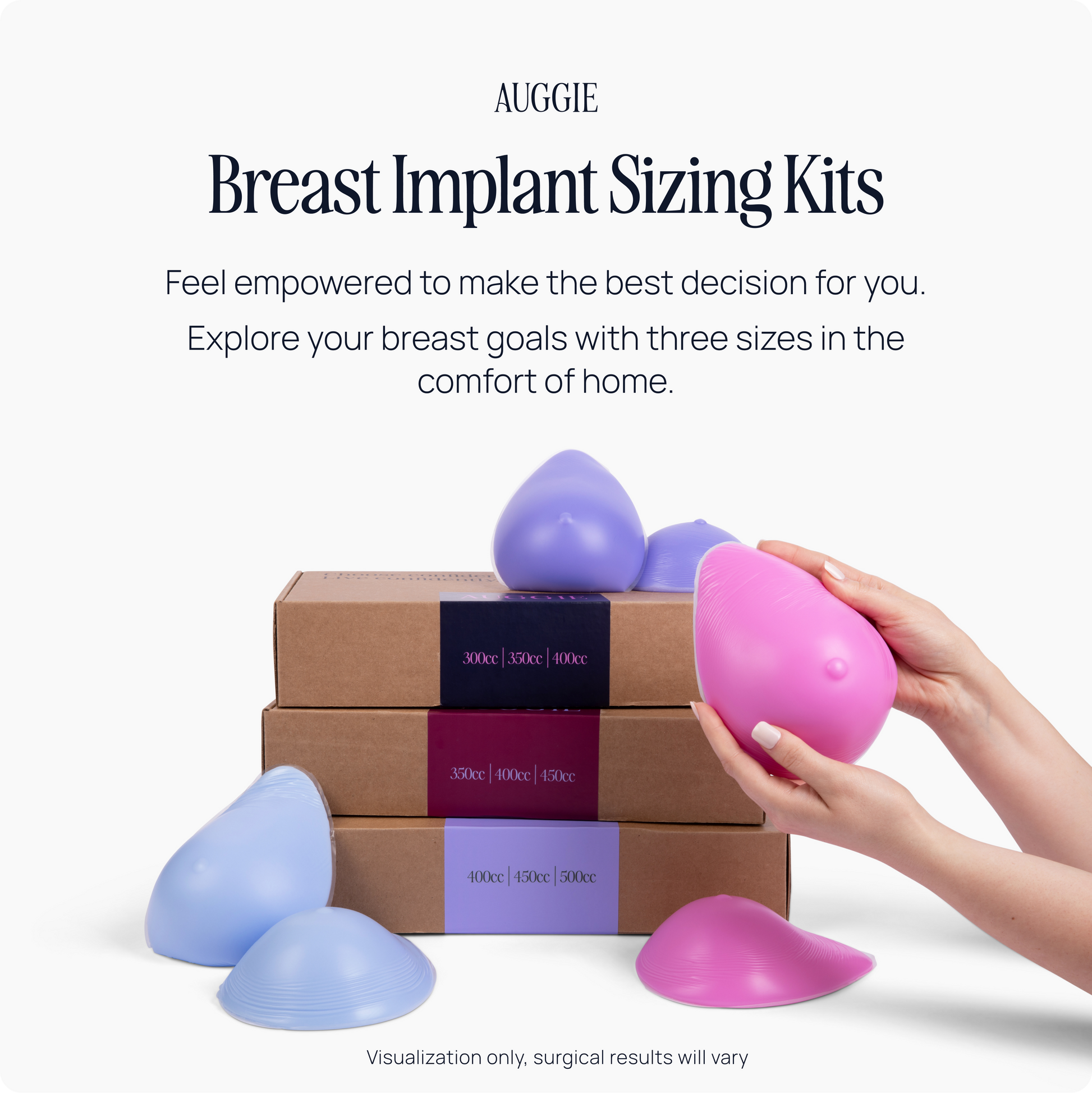
In Auggie's case, breast implant manufacturers make billions selling to surgeons. They have no incentive to create a direct-to-consumer model that might give women more power in the decision process or potentially reduce surgery rates. Device manufacturers are also subject to much more regulatory scrutiny, which increases the complexity of execution for them, but not for a new entrant.
This pattern repeats across industries:
- Eyewear manufacturers had no incentive to disrupt the high-margin business model they'd created with opticians (Warby Parker)
- Hotel chains had no reason to unlock the value of spare bedrooms in residential homes (Airbnb)
- Taxi medallion owners had no desire to make private drivers more accessible (Uber)
Where industry giants see threats to their business model, entrepreneurs see opportunity.
The Bottom Line: Finding Success in Plain Sight
Most successful businesses aren't built on revolutionary breakthroughs—they're built on making obvious solutions accessible to the people who need them most.
As Ashleigh's experience shows, sometimes the best business opportunity is simply spotting a problem people are already trying to solve with improvised solutions, and turning their makeshift fix into a proper product.
The next time you see someone using a creative workaround, don't just admire their ingenuity—ask yourself if there's a business opportunity hiding in plain sight.